
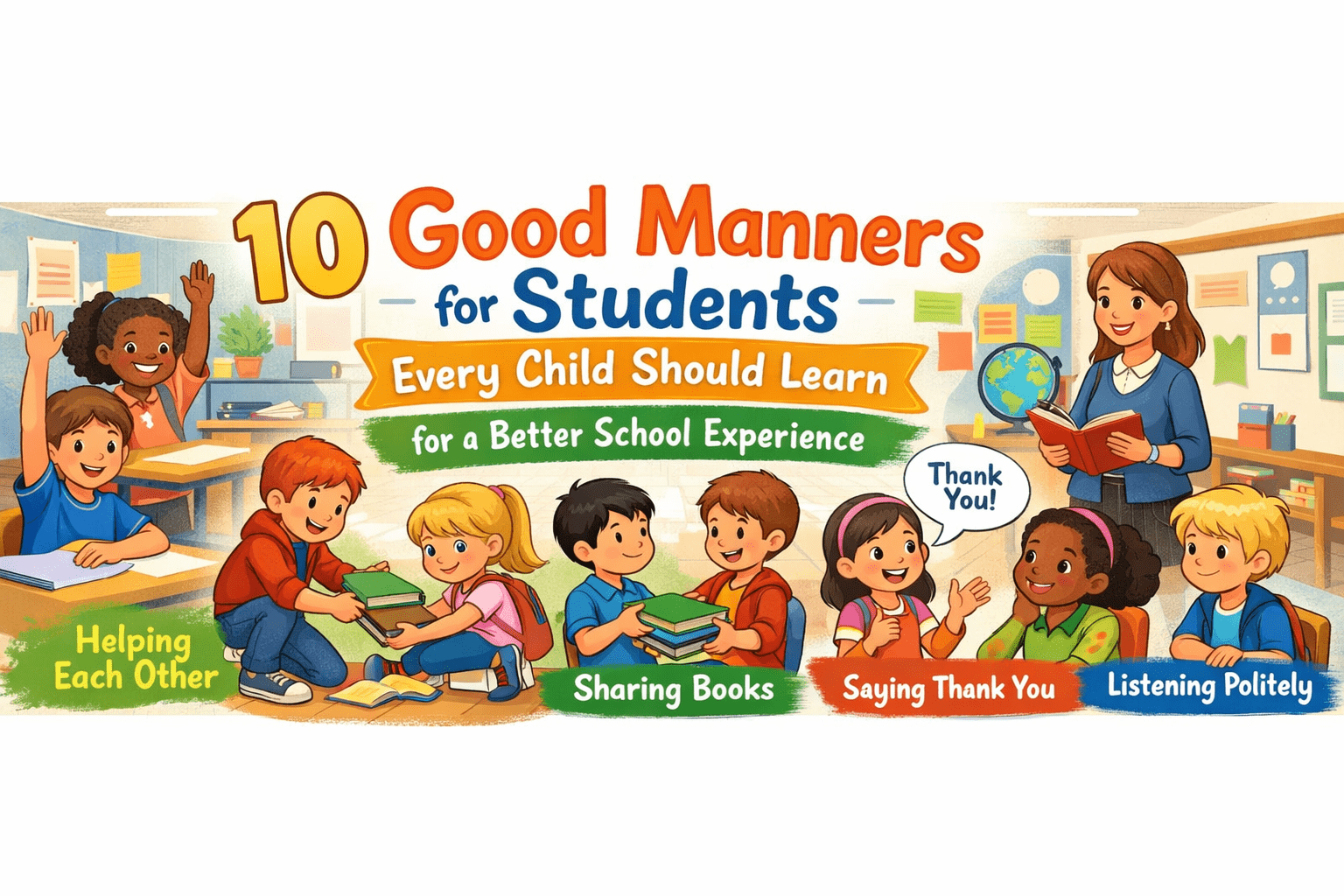
Good manners are more than polite words and good behavior; good manners are ethics that shape a child’s personality, communication style, and confidence. As students navigate their school life, they must interact well with teachers, peers, and support staff every day. Practicing the 10 good manners for students helps them build respectful relationships with others, all while creating a positive learning environment, making them responsible individuals.
A warm “good morning” or just a polite smile goes a long way when we talk about manners. Students who are gentle and greet their teachers and classmates respectfully are known to develop meaningful connections. All these small gestures nurture friendliness in students.
Active listening is a great and vital ability that students must build, as it is also a way of showing respect. When students wait patiently for their turn to speak, they make conversations more insightful and smoother. Teachers usually appreciate students who listen attentively and respond thoughtfully, particularly during discussions or instructions.
Constantly using polite language, such as “please,” “thank you,” and “excuse me,” helps to build a positive classroom environment, and it impacts each child as they learn to see each other. Demonstrating good manners in class works for students who maintain harmony and makes learning enjoyable for everyone.
Students have to work together to maintain their desks neat, dispose of the waste in dustbins, and handle school property with care. A clean classroom shows responsibility and teamwork. It also helps to reduce distractions and creates a healthy environment for learning for students.
Students sharing their supplies and helping classmates helps to understand a lesson, or offering support during activities that strengthen bonds and naïve school friendships. These habits work to build empathy as well as cooperation, essential qualities for personal and academic growth.
Rules are formed to reinforce safety, discipline, and fairness. Following classroom and school guidelines helps them to teach accountability. To understand how this structure shapes student behavior, explore the Importance of Discipline in School, which talks about why rules matter.
Good manners are not limited to how you speak and behave with and around your peers; gestures also matter equally. Making eye contact, standing aside to let others walk by, or nodding when you agree with someone to show courtesy that you are listening. Respectful body language helps to increase communication and build trust.
“Thank you” is a very important word in a student’s life; it helps to learn gratitude after receiving help, feedback, or some guidance from teachers. Whether it is a simple compliment from friends or just an acknowledgement of cafeteria staff, gratitude builds warmth and mutual respect in school settings.
Students who show good character when they follow instructions, speak kindly, and appreciate their teacher’s genuine efforts. To understand how teachers help to shape young minds, students can learn here about the Role of Teachers in School Education, which focuses on their influence on learning and growth.
Real-life etiquette examples are important as they help students to learn and apply manners in everyday real-life situations. Whether it’s waiting in line patiently, using indoor voices, or having respect for others’ belongings, practicing etiquette daily builds strong moral habits.
In a child’s life, good manners are stepping stones to building a strong character and lifelong success. When students put effort into practicing courtesy and kindness, they contribute to a better learning environment and become role models for others.
Looking to guide your child toward disciplined, value-based education? Connect with us at TKC World School and discover how we nurture strong character along with academic excellence.







Share This News